Navigate
Heroin Facts
- Typically, a heroin abuser may inject up to four times a day.
- Heroin is one of several highly addictive drugs derived from the opium poppy plant, along with morphine, opium, Dilaudid, and others.
- When sold at street level heroin is likely to have been diluted or cut with a variety of similar powders. The main dilution is glucose. However, the practice of using other substances such as caffeine, flour and talcum powder is a constant danger to users
- Withdrawal symptoms from heroin begin within 24 hours after last use and may last up to 7-10 days.
Black Tar Heroin
Black tar heroin is produced only in Mexico. Black tar heroin may be sticky like roofing tar or hard like coal, and its color may vary from dark brown to black. The color and consistency of black tar heroin result from the crude processing methods used to illicitly manufacture heroin in Mexico. Black tar heroin is often sold on the street in its tar-like state at purity ranging from 20 to 80 percent. Commonly, black tar heroin is sold in small foil or cellophane packets or in small toy balloons. To develop customers quickly, dealers may specifically target methadone clinics, where heroin addicts receive the drug methadone which blocks their need for heroin. These individuals become easy prey for the dealer and frequently become regular clients. The potency of street heroin is rarely known and overdoses often result.
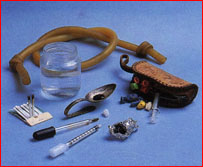 Black
tar heroin is most frequently dissolved, diluted, and injected. Black tar heroin
addicts place a small amount of black tar heroin in a spoon. The spoon they
use is bent so that it sits level without spilling when placed on a table. Then
they add a small amount of water which is then heated over a flame. Once the
black tar heroin has melted it is drawn up into a syringe and injected. This
method of administration poses special problems because of the transmission
of HIV and other diseases that can occur from sharing needles or other injection
equipment used. Paraphernalia for injecting black tar heroin includes hypodermic
needles, small cotton balls (used to strain the drug), water, and spoons or
bottle caps used for "cooking" or liquefying the heroin. The high
from black tar usually lasts from four to six hours.
Black
tar heroin is most frequently dissolved, diluted, and injected. Black tar heroin
addicts place a small amount of black tar heroin in a spoon. The spoon they
use is bent so that it sits level without spilling when placed on a table. Then
they add a small amount of water which is then heated over a flame. Once the
black tar heroin has melted it is drawn up into a syringe and injected. This
method of administration poses special problems because of the transmission
of HIV and other diseases that can occur from sharing needles or other injection
equipment used. Paraphernalia for injecting black tar heroin includes hypodermic
needles, small cotton balls (used to strain the drug), water, and spoons or
bottle caps used for "cooking" or liquefying the heroin. The high
from black tar usually lasts from four to six hours.
Southern California, primarily Los Angeles, is a major transportation and distribution hub for Mexican black tar heroin and brown powdered heroin destined for drug markets in California and throughout the United States. Nearly all of the heroin produced in Mexico is destined for U.S. distribution, and Mexico-based heroin continues to dominate the market in the western half of the United States. Evidence suggests that trafficking organizations from Mexico are attempting to produce higher purity heroin. Mexican heroin distribution networks in the United States are managed almost entirely by criminal organizations operating from Mexico and by Mexican-American criminal gangs that are in charge of the street-level distribution of heroin. In the past, couriers typically smuggled only small quantities of heroin across the U.S.-Mexico border. Now, however, heroin is being smuggled in larger amounts, as indicated by the seizure of larger shipments.